
Commercial Roofing Services in Hartford
Four Roof Systems and Full Replacement for Flat and Sloped Buildings
Our commercial roofing services in Hartford cover TPO, EPDM, industrial, and metal roofs, plus complete replacement when the old roof has run out of repairs.
Commercial Roofing Services in Hartford, System by System
Commercial roofing services in Hartford start with matching the system to the roof. Each card says where that system earns its place.
TPO Roofing
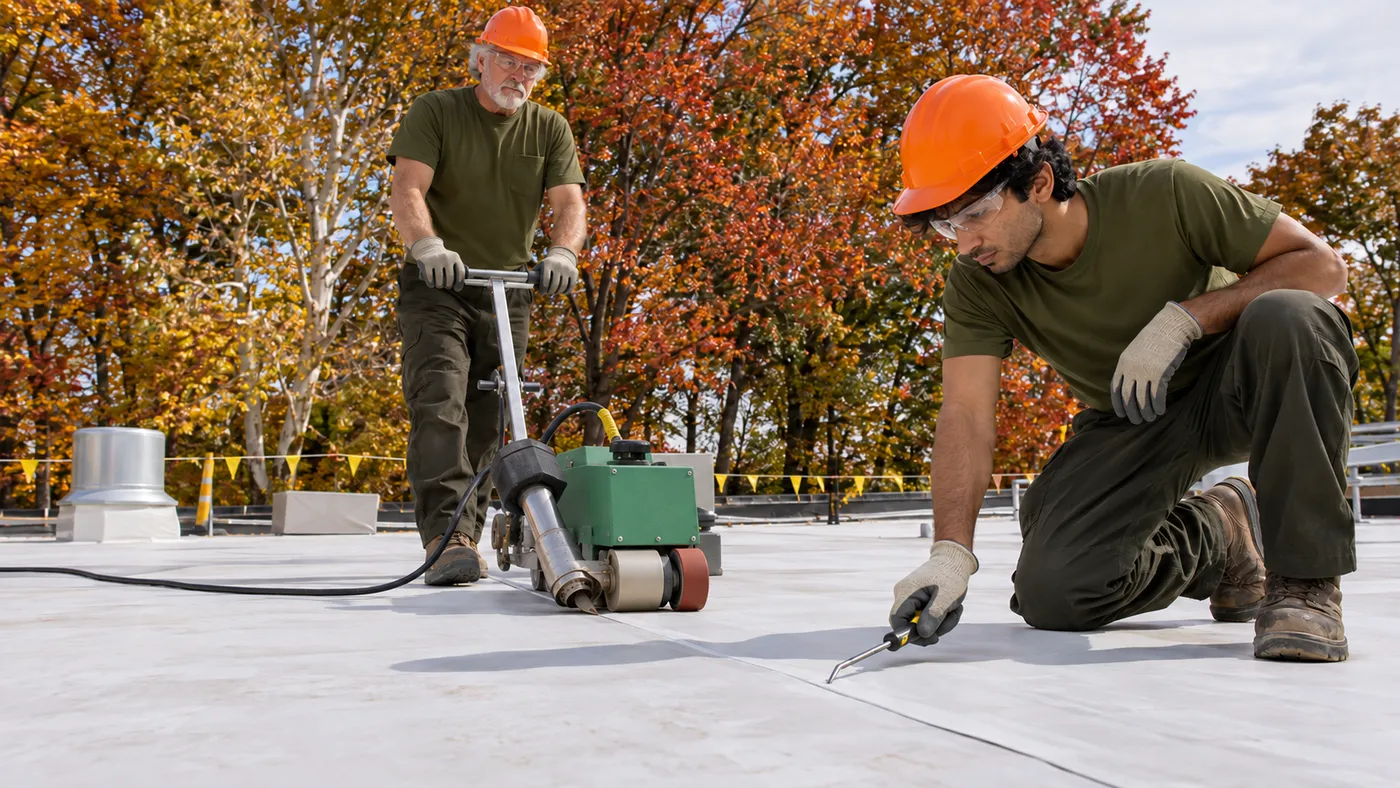
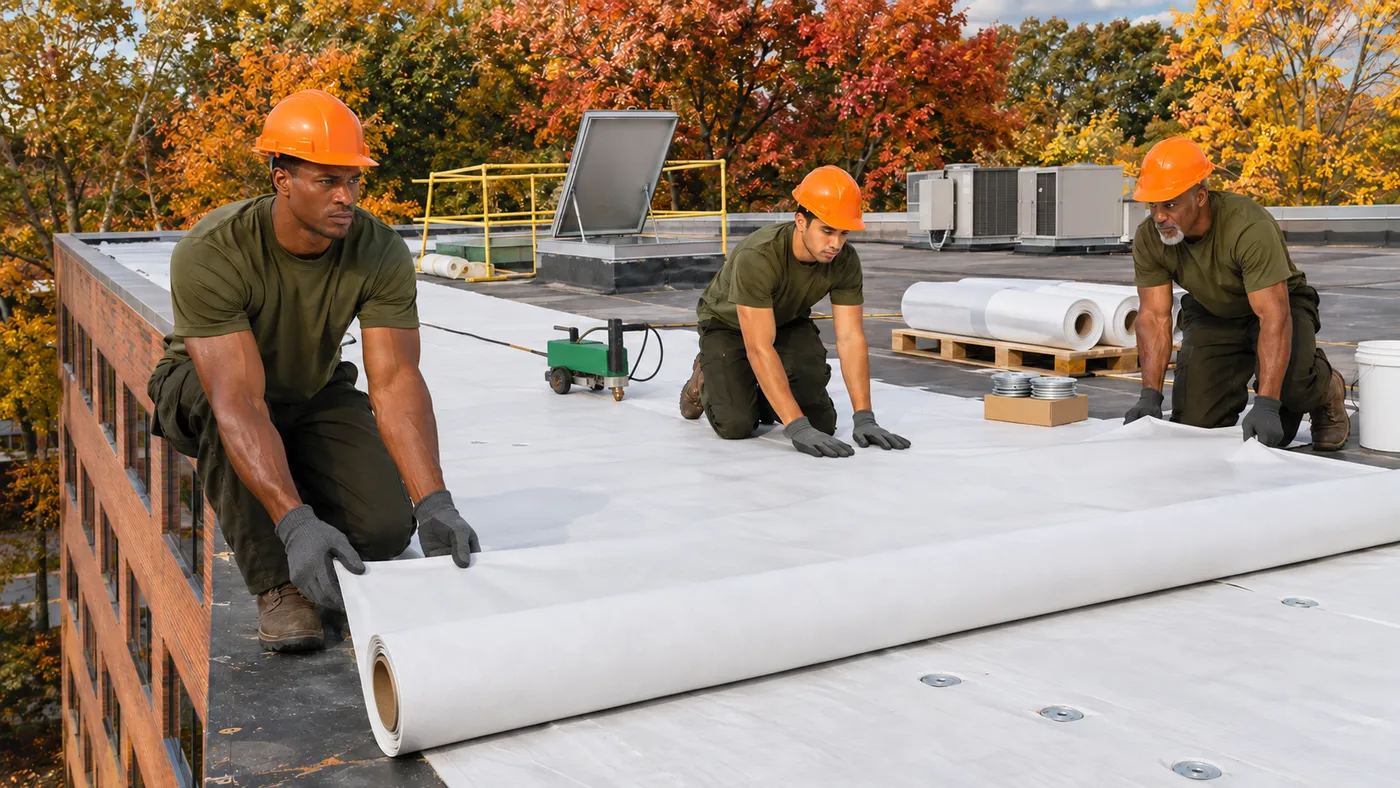
Heat-welded white membrane for warehouses, retail boxes, and offices with lots of rooftop equipment. Fits owners who want a reflective surface and seams that can be probed weld by weld, and roofs where tapered insulation can fix ponding at the same time.
See TPO roofing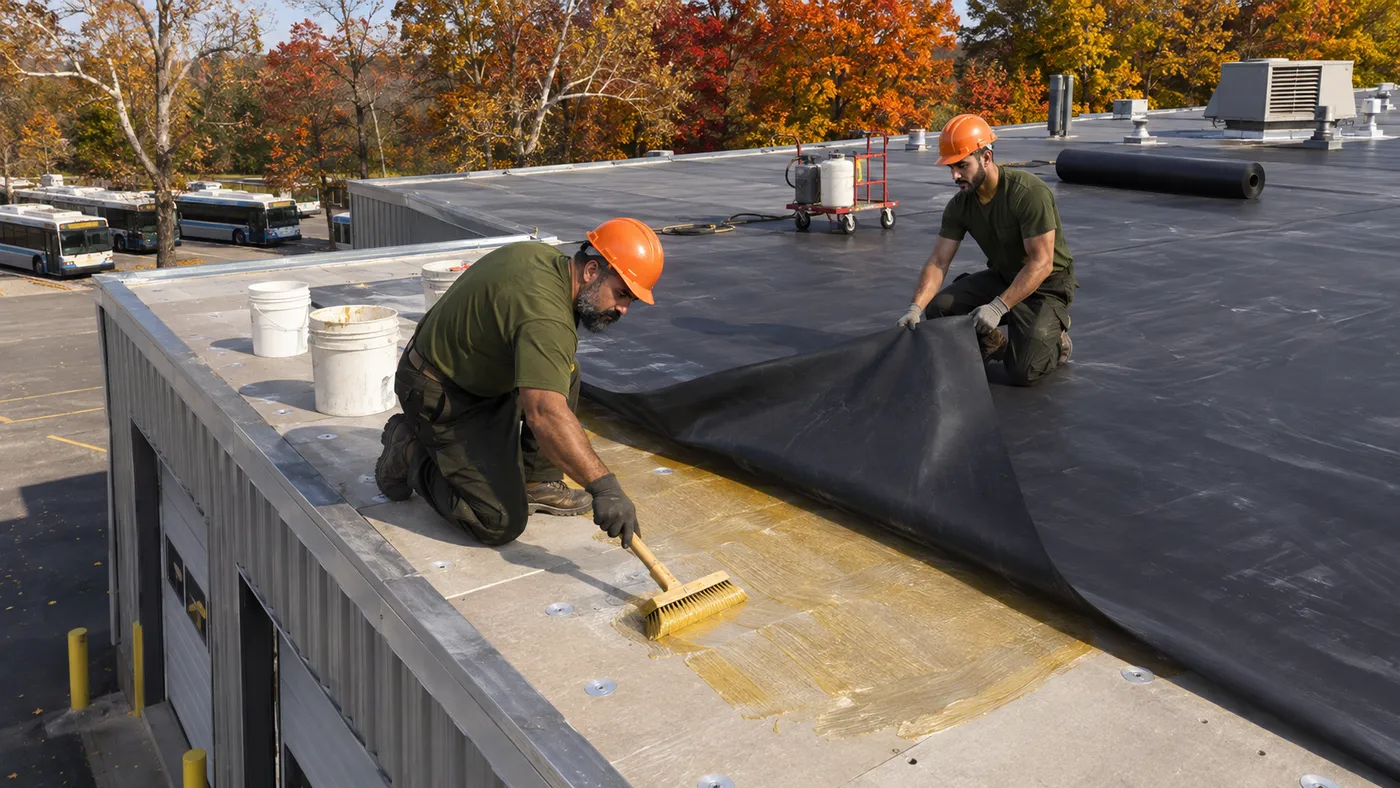
EPDM Roofing
Rubber sheet that stays pliable in deep cold. Wide rolls cover open roof fields on schools, churches, and masonry offices with only a handful of taped seams. Adhered, fastened, and ballasted versions let the attachment match the deck and the structure.
See EPDM roofing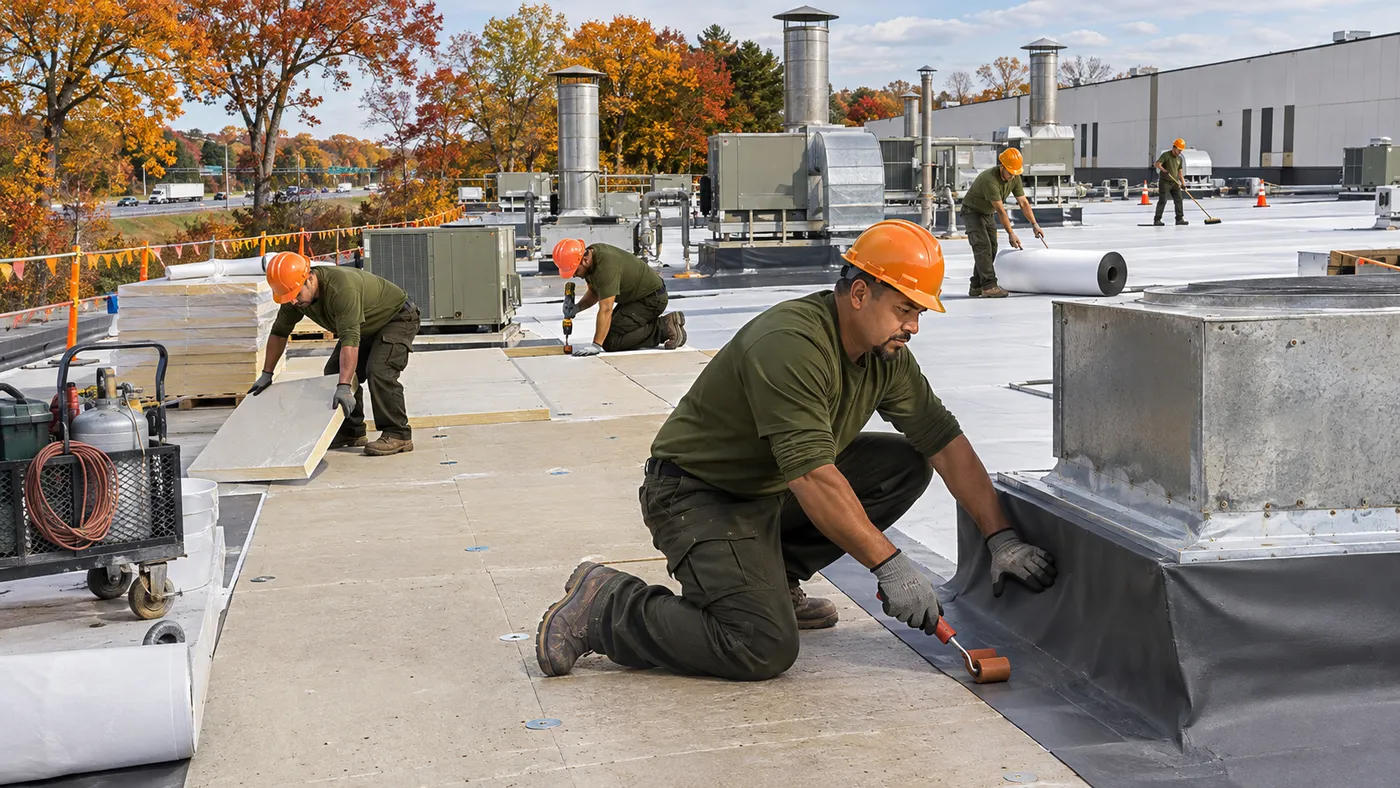
Industrial Roofing
Plant and shop roofs carrying exhaust stacks, fans, and pipe racks. Membrane choice follows what the process vents, and work is staged around shifts and shipping. Walkway pads go down on every route a mechanic uses.
See industrial roofing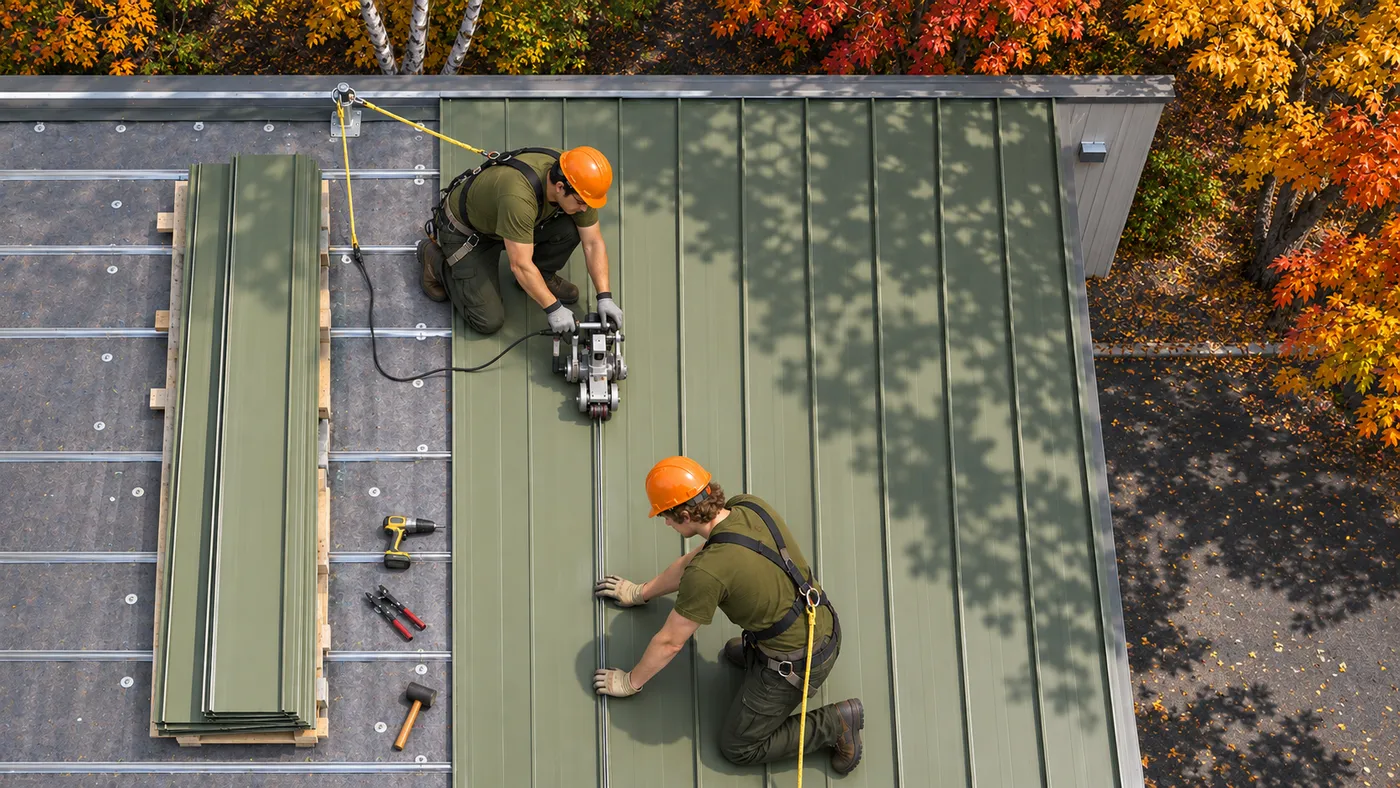
Commercial Metal Roofing
Standing-seam and screw-down panels on sloped commercial and farm buildings, plus repair and upkeep of existing metal: loose fasteners, open laps, and worn trim. Retrofit framing can turn a tired flat roof into a sloped metal one.
See commercial metal roofingWhich System Fits Which Roof
A quick comparison of the four systems on the points owners ask about most. Final choice comes after the roof walk and core cuts.
| System | Best On | Seams | Cold-Weather Notes | Watch For |
|---|---|---|---|---|
| TPO | Low-slope roofs with many curbs and pipes | Hot-air welded | Welding works in cold; adhesives wait for warmth | Punctures on busy service paths |
| EPDM | Open flat roofs, masonry buildings | Primer and seam tape | Stays flexible through freezing nights | Tape aging and shrinkage at walls |
| Industrial | Plants with stacks, fans, and racks | Welded or taped, per membrane | Sections planned around shutdowns | Oils and process exhaust on the sheet |
| Metal | Sloped commercial and farm buildings | Standing seam or lapped and screwed | Snow guards where slides hit doors | Backed-out screws and condensation |
| Full replacement | Roofs with wet insulation or failed decks | Matches the new system chosen | Tear-off sized to what closes each day | Permit and snow-load review before ordering |
Not Sure Which Roof You Have?
Older buildings often carry two or three roofs stacked up. Call us, and a roof walk with core cuts will sort out what is up there.
Commercial Roof Replacement in Hartford
Replacement lives here on the services page because it can end in any of the four systems.
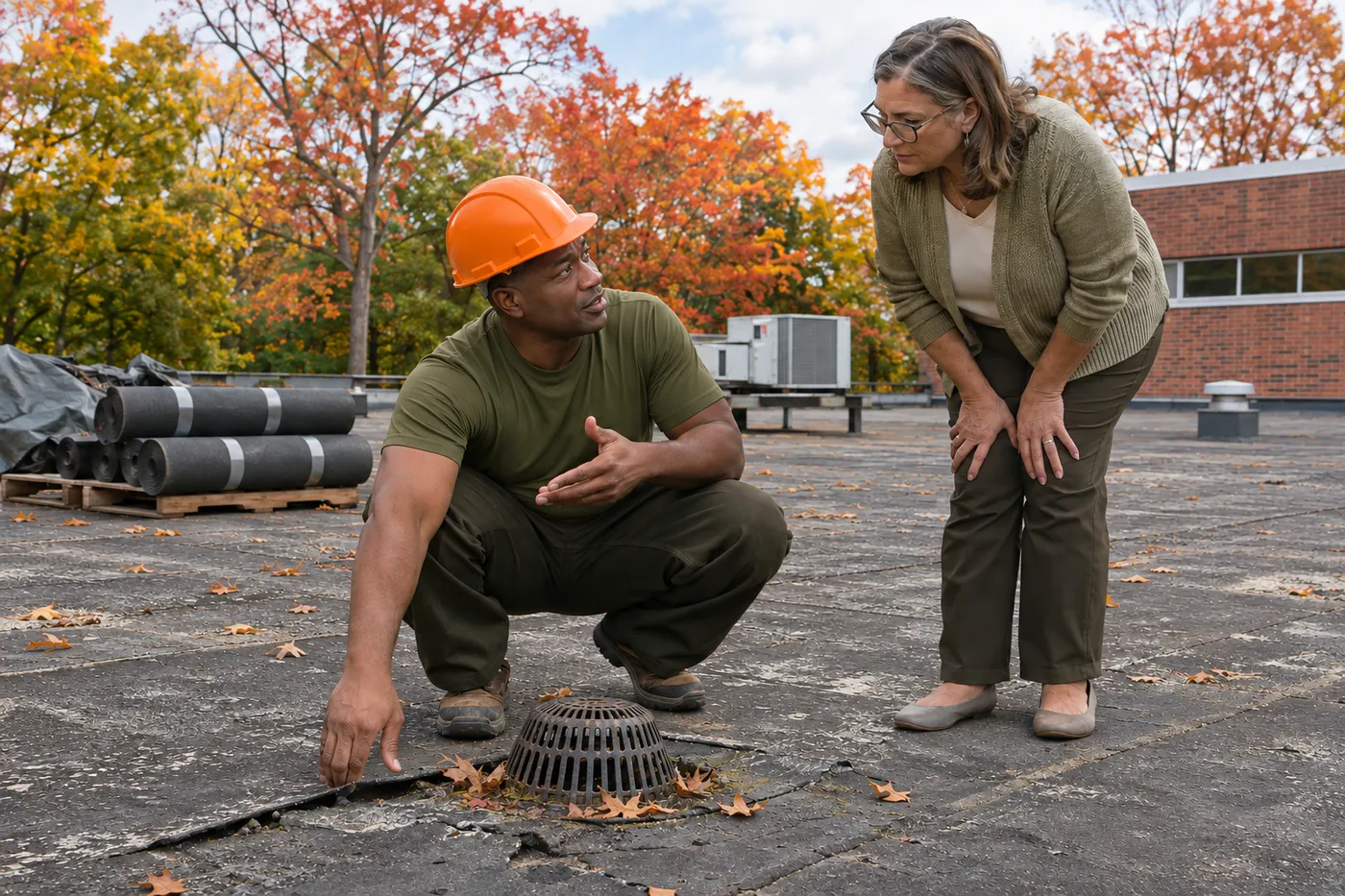
When to replace a commercial roof comes down to how much of it is still dry and attached. Core cuts count the layers, show whether the insulation is wet, and tell us if the deck underneath is solid.
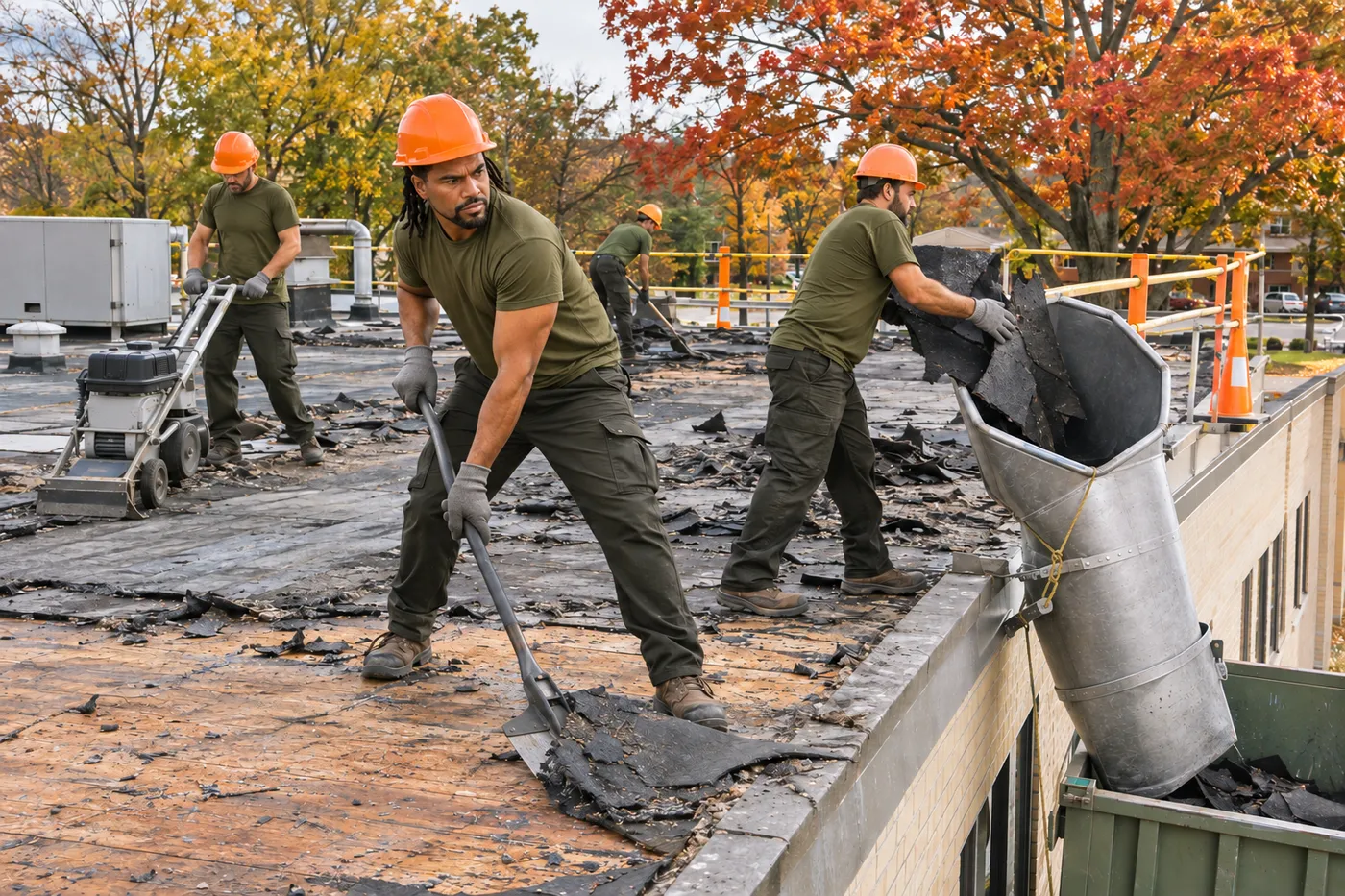
A full replacement removes the old layers in sections, replaces wet insulation and soft deck, installs new insulation and cover board, then the new membrane or metal with fresh flashing at every wall, curb, and drain.
- Tear-off sized to what can be closed up each day
- Tapered insulation where water used to pond
- Hartford building permit confirmed before the start date
How a Hartford Commercial Roofing Job Runs
The same five stages hold for a small office roof or a plant. Lanes show which happen up top and which happen at ground level.
- On The Roof
Step 1: Inspect Your Roof
Seams, curbs, drains, and edges get a close look, and core cuts show the layer count, the insulation, and any moisture above the deck.
- On The Roof
Step 4: Build the Roof Section by Section
Each section is opened, repaired, insulated, covered, and flashed before the next one starts, so the building stays dry overnight.
- On The Roof
Step 5: Final Check of Every Detail
Welds are probed, seams and flashings are checked, drains are cleared, and you walk the roof with us before we leave.
- Around The Building
Step 2: Pick the System and Schedule
With the core results in hand, you choose between the systems that fit, and we set dates around deliveries, tenants, and the permit.
- Around The Building
Step 3: Stage Material and Protect Entrances
Dumpsters, lifts, and pallets go where they block the least, and doors under the work area get covered walkways or alternate routes.
Questions About Roofing Services and Replacement
What owners ask when they are deciding between systems or between repair and replacement.
Question about your own roof?
Call UsCan one building have more than one roof system?
Yes. A plant might carry TPO over the office wing and metal over the warehouse bay. Each section gets the system that fits its slope, deck, and equipment, and the joints between them get their own flashing detail.
Is a recover over the old roof ever an option?
Sometimes. If core cuts show one existing roof with dry insulation and a firm deck, a new membrane can go over it. Wet insulation or two roofs already in place mean a tear-off.
How long does a commercial roof replacement take?
That depends on the roof size, the number of curbs, the weather, and how many sections can be opened at once. We give you a schedule after the inspection, with the order the sections will be done.
Will tenants have to leave during the work?
Usually not. Work goes in sections, noisy tear-off can be timed for off-hours where the building allows, and entrances under the work get protected. We plan that with you before the start.
What happens to the old roof material?
It leaves the property in dumpsters or trucks as each section comes off. Chutes or lifts carry debris down away from entrances, and the ground around the building is cleaned each day before the crew goes home.
Should we fix ponding during a replacement?
Usually, yes. A replacement is the cheapest time to add tapered insulation or crickets that slope water toward the drains, since the old layers are already off and the deck is open to work on.
Can you add insulation when the roof is replaced?
Yes, and the energy code often calls for it. Added insulation changes curb and wall flashing heights, and in Connecticut it can trigger a structural snow-load check under the existing building code, which we sort out with the permit.
Do you install roofs on new buildings or only replace old ones?
Both. New commercial buildings get the same system choices: TPO, EPDM, industrial membranes, or metal panels, installed over the insulation the design calls for.
Book Commercial Roofing Services in Hartford
Tell us what the roof is doing and what the building is used for. We will walk it, take core cuts, and recommend the system that fits.