
Hartford Industrial Roofing Contractor
Plant Roofs Built Around Exhaust Stacks, Fans, and Pipe Racks
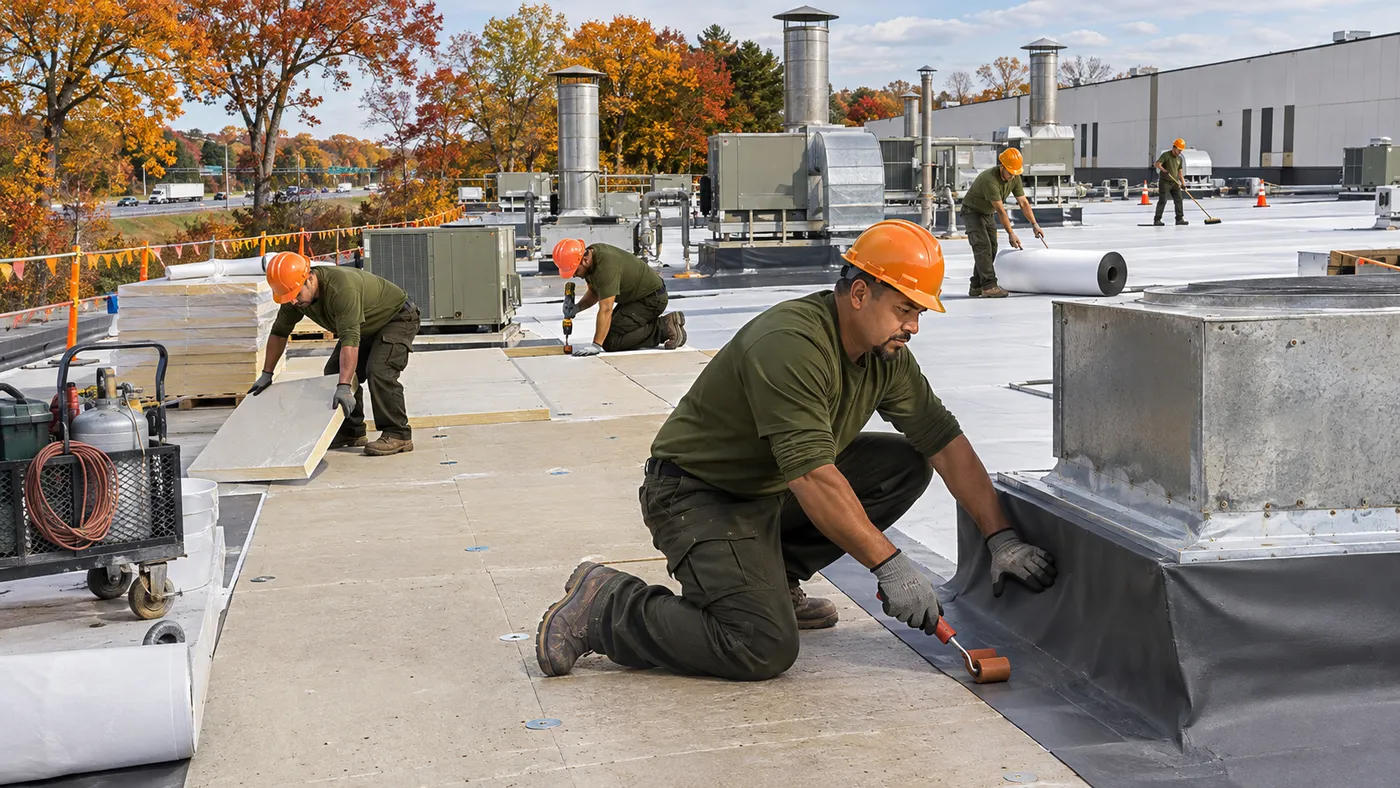
As a Hartford industrial roofing contractor, we install membrane and metal roofs on plants, shops, and garages while production keeps running below.
- Plants, Shops, Garages
- Stacks and Fans Flashed
- Staged Around Shifts
- Walkways on Service Routes
Does Your Plant Need Hartford Industrial Roofing?
Hartford industrial roofing covers roofs where the building's work shows up on top. These signs point to an industrial approach.
Industrial Roofing Fits When
- Exhaust stacks and fans vent onto the roof
- Mechanics walk the roof every week
- Pipe racks or ducts cross the field
- Production cannot stop for the work
- Roof spans a large plant or shop floor
A Standard System May Do When
- Roof carries only one or two rooftop units
- Nothing vents onto the membrane
- Building is an office or small retail space
- Service visits happen a few times a year
- Roof is small and easy to close in a day
Industrial Roofing Problems on Hartford Plants
Plant roofs wear out where the process meets the roof. These are the six we see most.
Residue Around Exhaust Fans
Oils and grease from kitchens or process exhaust soften membranes not rated for them, and the sheet around the fan turns gummy or brittle.
Low Equipment Curbs
Curbs set too short leave flashing below snow and ponding lines, so water reaches the top edge every winter. Raising them during a reroof means coordinating with the mechanical contractor.
Wear on Service Routes
Mechanics carrying parts to fans and units scuff and puncture the sheet along the same path every week.
Pipe Rack Supports
Racks set straight on the membrane cut into it as pipes expand and contract, opening slits that are hard to spot. New supports sit on pads or stands flashed into the roof.
Condensation From Below
Humid process air reaches cold roof layers and condenses, wetting insulation from inside even with a dry membrane.
Drains Buried by Equipment
Units and ducts added over the years end up next to drains, blocking flow and making ponding worse around them. Relocating a drain or adding a cricket fixes the low spot.
Hartford Industrial Roofing Options and Materials
Industrial roofing materials follow what the plant puts on its roof. These are the common paths.
| Option | Fits | Key Detail | Watch For |
|---|---|---|---|
| Exhaust-rated membrane | Plants venting oils or grease | Sheet rated for the exposure | Residue zones around fans |
| Thicker TPO or EPDM | Roofs with heavy service traffic | Walkway pads on every route | Punctures near units |
| Metal roof stays metal | Large metal plant buildings | Fasteners and laps renewed | Condensation in unheated bays |
| Raised curbs and pipe supports | Roofs crowded with equipment | Flashing above snow line | Coordination with mechanical trades |
What Industrial Roofing Changes for Hartford Plants
An industrial roof is built around the equipment and the work schedule, and these four gains follow from that.
Membrane That Handles the Exhaust
Choosing a sheet rated for what the plant vents keeps the roof around fans from softening and failing early.
Safe Paths to Equipment
Walkway pads from the hatch to every unit protect the membrane and give mechanics a marked route across the roof.
Curbs Above the Snow Line
Raising low curbs and flashing them to full height keeps winter water below the top of every penetration.
Production Keeps Running
Sectioned work, set zones, and coordinated shutdowns let the plant run while the roof is replaced overhead.
Leak Over a Production Line?
Water over equipment cannot wait for a quiet week. Call us with what is dripping and where, and we will plan the fastest safe fix.
Industrial Roofing Work in Hartford Plants
How a plant roof job splits between the roof and the floor below.
- On The Roof
Step 1: Inspect Your Roof
We map every stack, fan, curb, and rack, take core cuts, and note where residue and foot traffic are wearing the sheet.
- On The Roof
Step 3: Replace the Roof in Sections
Each section opens, gets new insulation and membrane, and closes up before the shift ends, with zones kept away from intakes.
- On The Roof
Step 5: Flash, Pad, and Verify
Stacks, curbs, and supports are flashed, walkway pads go down, and every seam is checked before the roof goes back to the plant.
- Around The Building
Step 2: Meet Plant Staff
Shift times, shutdown windows for rooftop equipment, intake locations, and shipping lanes are set with your maintenance and safety leads.
- Around The Building
Step 4: Coordinate Equipment Moves
When units must be lifted or disconnected for curb work, we schedule it with your mechanical contractor and the crane.
Related Systems for Hartford Industrial Buildings
Plant campuses often mix systems. These three cover the office wings, warehouses, and metal bays around them.

TPO Roofing
Welded white sheet for office wings and warehouse sections with many curbs and no process exhaust.
TPO roofing in Hartford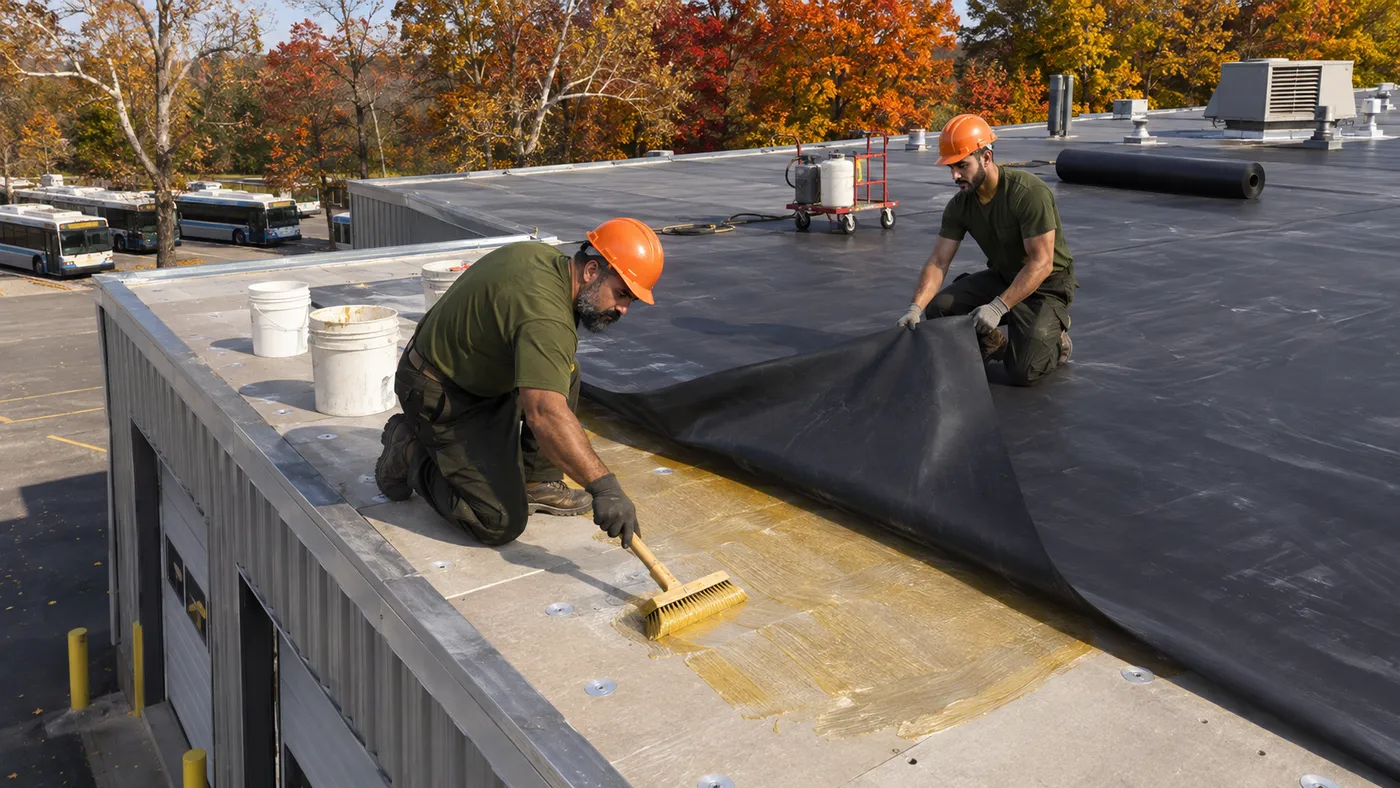
EPDM Roofing
Rubber sheet for open, simple roof sections where wide rolls keep seams to a minimum.
EPDM roofing in Hartford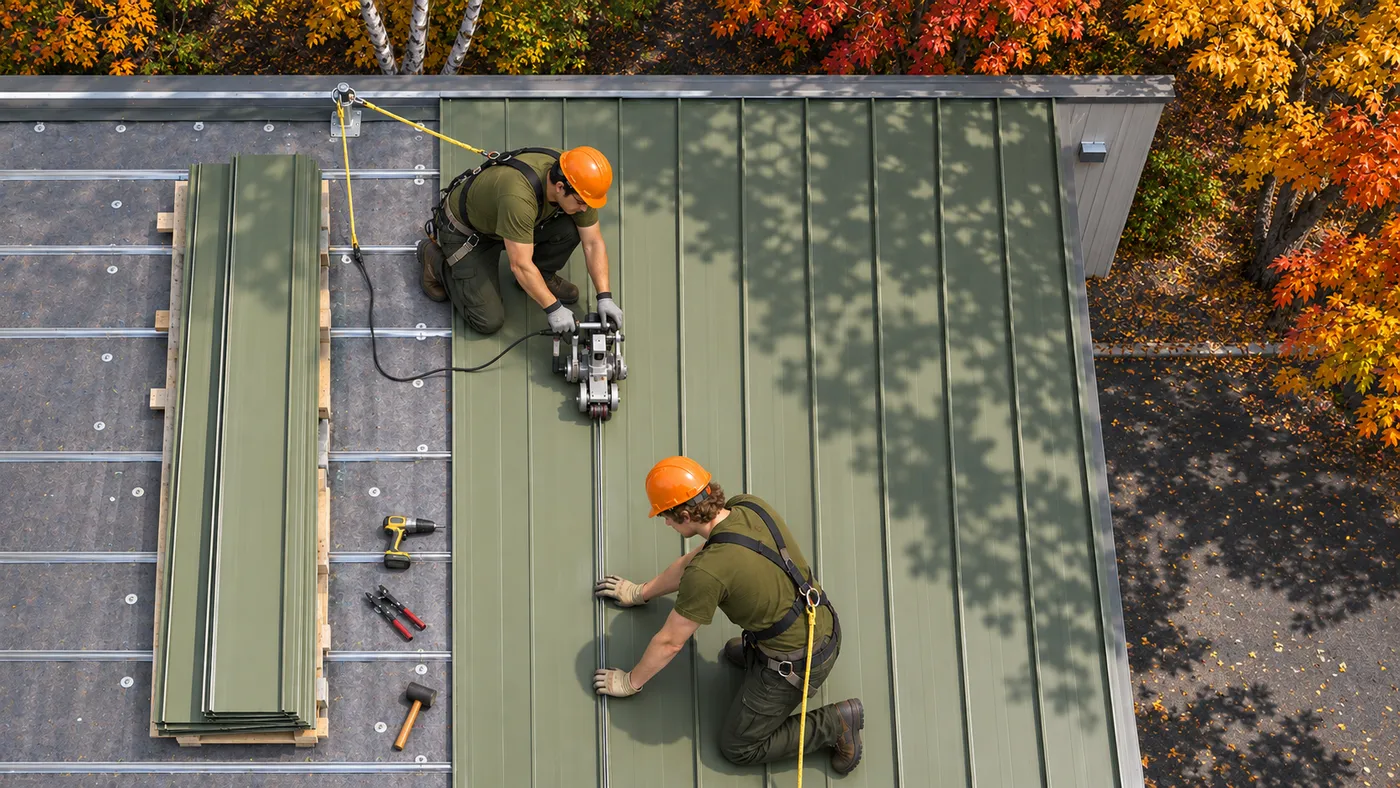
Commercial Metal Roofing
Panel roofs on metal bays and storage buildings, with fasteners, laps, and trim renewed.
Commercial metal roofing in HartfordHartford Industrial Roofing Questions
What plant managers ask before an industrial roof project.
Question about your own roof?
Call UsWhat does industrial roofing cover for Hartford manufacturing plants?
It covers big, equipment-heavy roofs over plants, shops, and processing floors. We install membrane or metal sized to the building, flash stacks, vents, and curbs, and lay walkway pads where crews service equipment.
How do you handle roofing around rooftop equipment on Hartford industrial buildings?
Units, fans, and racks are treated as their own work zones. Each curb and penetration is flashed to the maker's details, low curbs get raised, and we coordinate with mechanical contractors when units must move.
What industrial roofing materials hold up on Hartford plants?
It depends on what lands on the roof. Oils, grease, or chemicals call for a sheet rated for them; heavy traffic calls for thicker membrane and walkway pads. Big metal buildings often stay metal.
What happens during an industrial roof replacement in Hartford while the plant keeps running?
The roof is done in sections, each closed before the crew leaves. Zones stay clear of intakes and exhausts where possible, and equipment shutdowns, crane lifts, and debris chutes are planned around shipping and shifts.
Can commercial roofing be installed in a Connecticut winter?
Some can. Welded and fastened systems handle cold better than adhesives, which have minimum temperatures. The deck must be clear and dry. In a winter emergency we dry in a section and finish it when it warms up.
Do you work with our safety and maintenance staff?
Yes. Before work starts we review lockout needs for rooftop equipment, hot-work rules if any welding is near the plant, fall protection at roof edges, and the routes forklifts and trucks use below the work zone.
What roofing do Hartford bus garages and fleet buildings need?
These roofs see exhaust, heat, and moisture from below and service traffic on top. Stacks and vents get careful flashing, units get walkway pads, and insulation is chosen to limit condensation, with work timed around vehicle movement.
Hire a Hartford Industrial Roofing Contractor
Tell us what the plant makes and what sits on the roof. We will plan the work around your shifts and price the system that fits.