

Hartford TPO Roofing Contractor
Heat-Welded Membrane That Protects Busy Flat Roofs
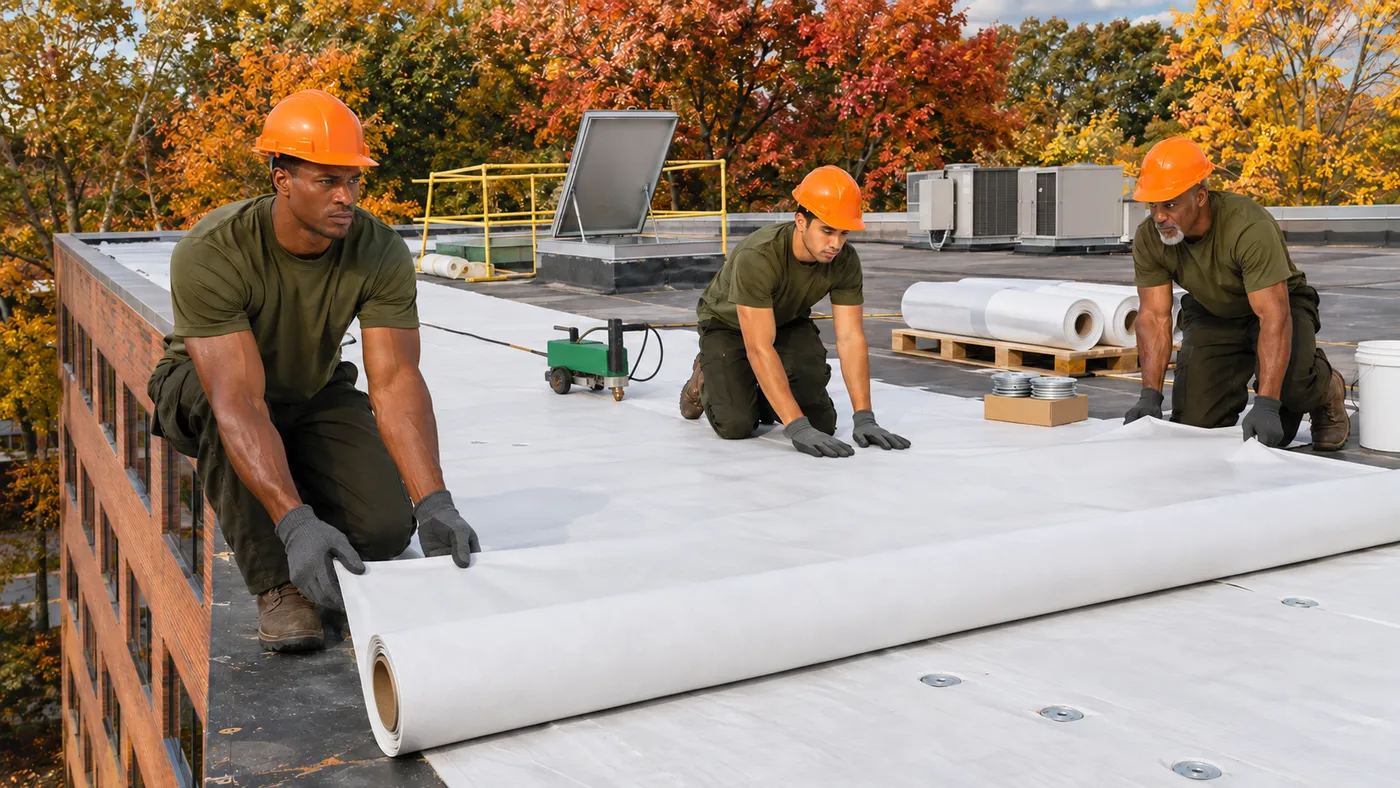
As a Hartford TPO roofing contractor, we install white TPO membrane on flat and low-slope commercial roofs, with every seam welded and every curb flashed.
- Hot-Air Welded Seams
- Light, Reflective Surface
- Fastened or Adhered
- Curbs Flashed to Spec
Is Your Roof a Fit for Hartford TPO Roofing?
Hartford TPO roofing fits a lot of flat commercial roofs, though not every one. Here is how the two sides usually sort out on the roof walk.
TPO Tends to Fit
- Warehouse or retail roof with many curbs and pipes
- Owner wants a light, reflective roof surface
- Deck can take mechanical fasteners
- Ponding that tapered insulation can fix
- Roof where welds can be probed and recorded
Look at Other Options When
- Plant vents oils or grease onto the roof
- Roof is steep enough for metal panels
- Building needs large sheets with almost no seams
- Ballast stone is already engineered into the roof
- Owner prefers a black rubber surface
TPO Roofing Problems on Hartford Flat Roofs
These conditions show up on TPO roofs we inspect around Hartford. Most trace back to welds, punctures, or water that never leaves.
Cold or Missed Welds
A weld that never fused can look fine from above. Probing every lap with a seam tool finds the gaps before water does.
Punctures on Service Paths
Dropped screws, tools, and boots near rooftop units cut the sheet. Walkway pads on those routes take most of that wear off the membrane.
Ponding Between Drains
Flat insulation leaves low spots where water sits for days. Tapered insulation built into the new roof slopes it toward the outlet.
Loose Curb Flashing
Corners at HVAC curbs crack when flashing was cut short. New TPO roofs get preformed corners and flashing run up the full curb height.
Wall Flashing Pulling Away
Membrane terminated low on a parapet lets meltwater in behind it. Termination bar and counterflashing set high keep the top edge dry.
Weathered Surface
Older sheets chalk and craze with sun. An aged surface tells us how much life the membrane has left and whether welding new patches will hold.
Hartford TPO Roofing Options for Warehouses and Offices
The membrane is the same; attachment and insulation change with the deck and the building. These are the choices we price.
| Option | How It Goes Down | Fits | Notes |
|---|---|---|---|
| Mechanically fastened | Plates and screws at the laps, seams welded over them | Steel and wood decks on large warehouses | Fewer adhesive limits in cold weather |
| Fully adhered | Glued to cover board with adhesive | Offices and roofs with wind exposure | Smooth surface, adhesive needs mild temperatures |
| Over tapered insulation | Sloped boards under the sheet | Roofs with ponding near drains | Fixes drainage while the roof is open |
| Thicker membrane | Same install, heavier sheet | Roofs with heavy service traffic | More material to weld and to wear |
What TPO Roofing Gives Hartford Buildings
TPO earns its spot on Hartford roofs through a few specific traits, each tied to a part of the roof you can point at.
Seams You Can Test
Each welded lap is probed with a seam tool and patched on the spot if a gap shows, so the field leaves the job tested.
A Cooler Summer Roof
The white surface reflects sun that a black roof would soak up, which helps rooftop units and top-floor spaces in July.
Clean Flashing at Equipment
Preformed TPO corners and pipe boots weld into the field, giving rooftop units a tight detail without a field of caulk.
A Chance to Fix Drainage
Tapered insulation under the new sheet moves standing water to the drains, ending the ponding that wears membranes early.
Seams Opening on Your TPO Roof?
A split lap or loose curb corner lets water travel under the sheet before it shows inside. Call us and describe where the stains are.
TPO Roofing Work in Hartford, Step by Step
The roof-side steps and the building-side steps for a TPO job, in the order they happen.
- On The Roof
Step 1: Inspect Your Roof
Core cuts show the layers and any wet insulation, and we measure curbs, drains, and wall heights so the TPO layout and flashing are planned before ordering.
- On The Roof
Step 3: Tear Off and Insulate
Old layers come off one section at a time, soft deck is replaced, and new insulation and cover board are fastened down before the sheet.
- On The Roof
Step 4: Weld the Field and Flash
Sheets are rolled out, fastened or adhered, and welded at every lap; curbs, pipes, walls, and drains get TPO flashing welded into the field.
- Around The Building
Step 2: Order Membrane and Set Dates
Membrane width, thickness, and insulation are ordered to the measurements, and dates are set around docks, tenants, and the Hartford permit.
- Around The Building
Step 5: Probe, Clean Up, and Hand Over
Every seam gets probed, debris leaves the property, and you get the membrane, insulation, and attachment details for your files.
Other Roof Systems Next to Hartford TPO Roofing
Some buildings need more than one system. These three sit beside TPO on many Hartford properties.
EPDM Roofing
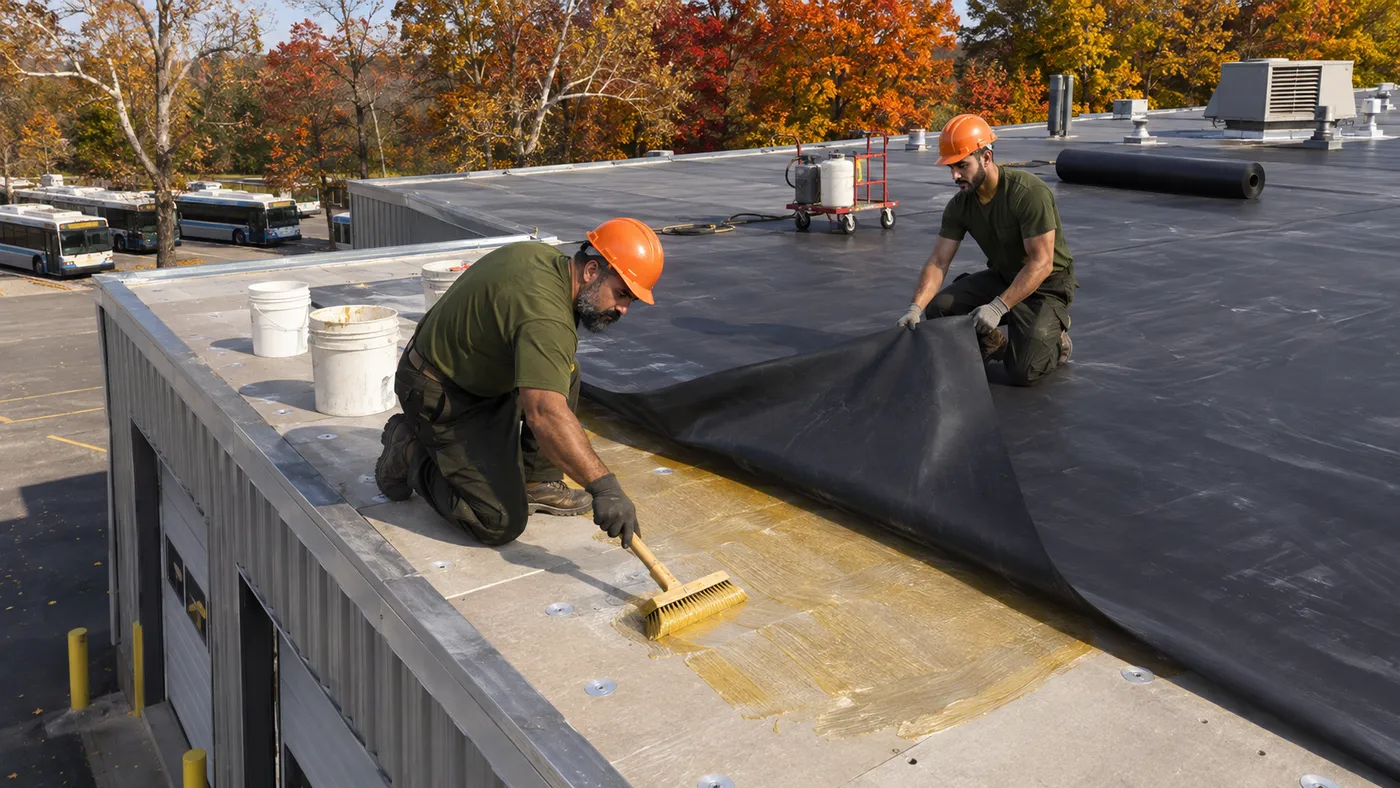
Rubber sheet for open masonry roofs where few seams and cold-weather flexibility matter more than a reflective surface.
EPDM roofing in Hartford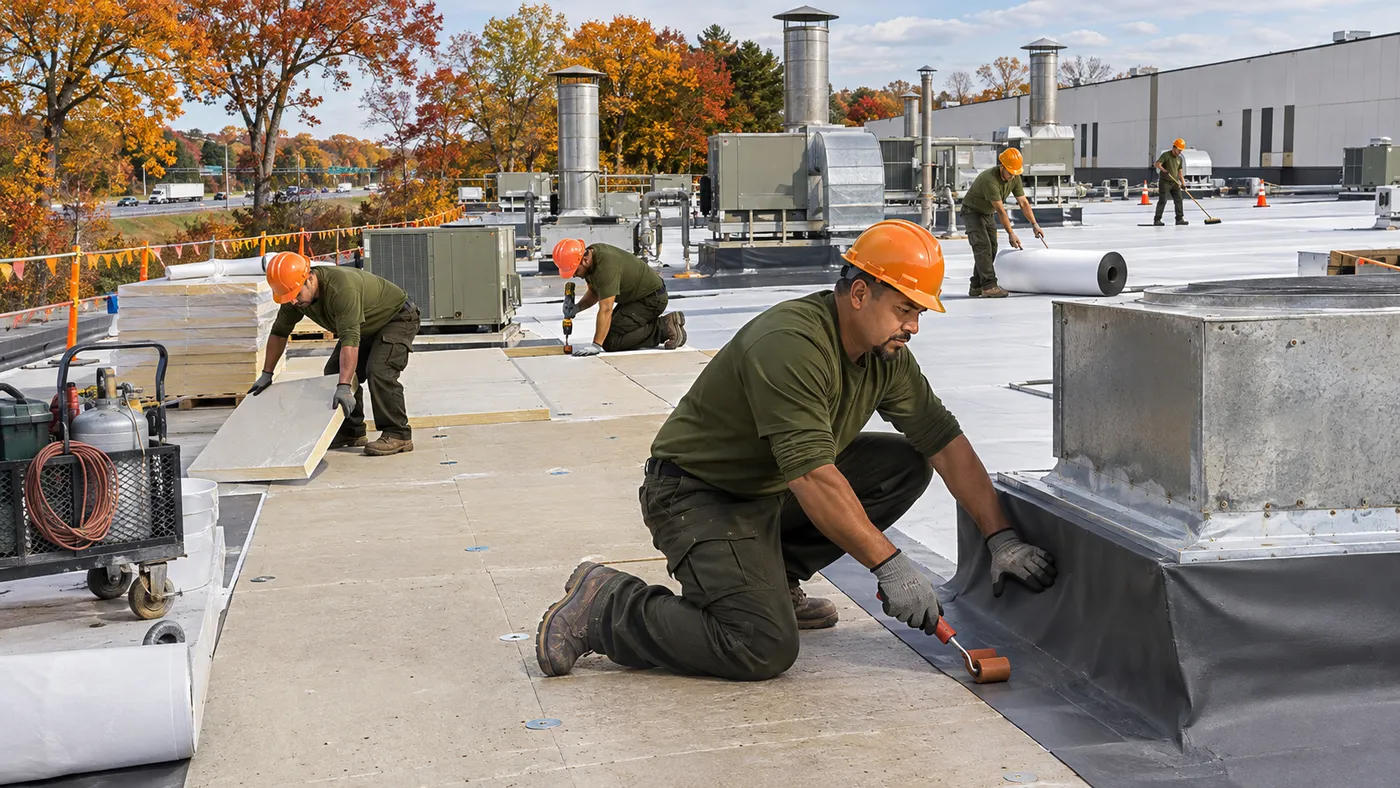
Industrial Roofing
Plant roofs with exhaust and heavy equipment, where the membrane has to stand up to what the process vents.
Industrial roofing in Hartford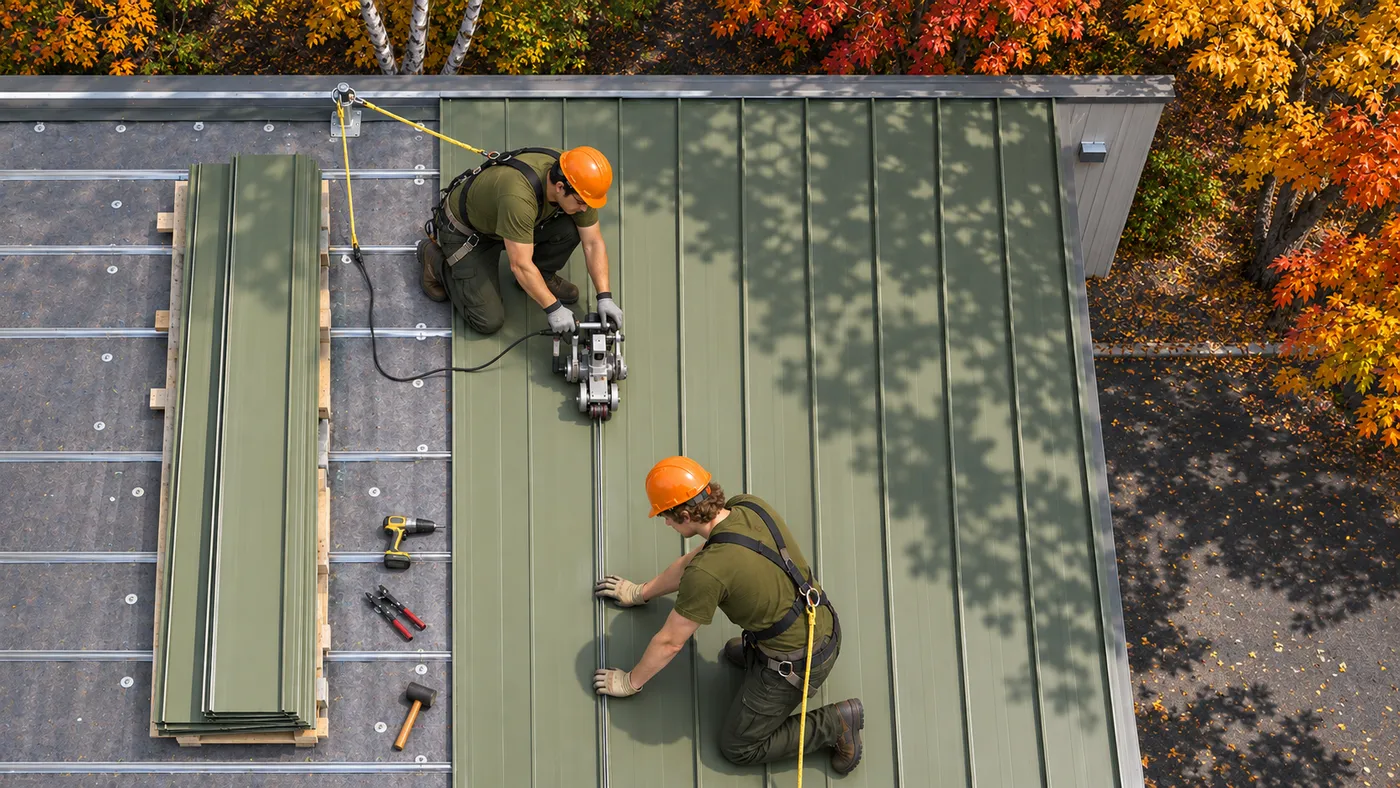
Commercial Metal Roofing
Sloped wings, warehouses, and retrofit framing where panels shed snow and water better than a flat sheet.
Commercial metal roofing in HartfordHartford TPO Roofing Questions
Questions owners ask before choosing TPO for a flat roof.

Question about your own roof?
Call UsWhat is TPO roofing, and is it used on Hartford commercial buildings?
TPO is a light-colored single-ply sheet with seams welded together by hot air. Around Hartford it covers warehouses, retail buildings, and offices with flat or low-slope roofs, installed fastened or adhered over insulation.
What changes TPO roofing cost on a Hartford flat roof?
Sheet thickness, fastened versus adhered attachment, how much insulation goes under it, and how many curbs and pipes need flashing. Tear-off layers and wet insulation add labor; tapered insulation adds material but fixes ponding at the same time.
TPO vs EPDM: which fits a Hartford commercial roof?
TPO suits roofs crowded with penetrations and owners who want a reflective surface, thanks to its welded seams. EPDM suits open roofs where big flexible sheets keep seams to a minimum. The deck, insulation, and equipment usually decide it during the inspection.
Can a TPO roof last 30 years in Connecticut?
Nobody can promise a number of years. How long a TPO roof lasts depends on sheet thickness, weld quality, drainage, foot traffic, and how fast small damage gets fixed. Thicker sheets, tapered insulation, walkway pads, and regular checks all help.
What are the downsides of TPO roofing in a Connecticut climate?
It can be punctured by tools and foot traffic, so walkway pads matter. Welds need trained hands and the right conditions. The white surface helps in summer but does little in winter, and the top surface weathers over time.
What roof systems suit Hartford interstate warehouses?
Mechanically fastened TPO or EPDM over rigid insulation covers most of them, laid out to keep seams few and water moving to the drains. Work is phased so docks and storage stay open.
Hire a Hartford TPO Roofing Contractor
Tell us the building size and what is on the roof. We will walk it, take core cuts, and price the TPO system that fits.